Open source · Public goods · Since 2016
The tools that align AI with human values should be public goods.
EthicsNet incubates open-source alignment infrastructure — runtime tools, governance frameworks, diagnostic taxonomies — for engineering teams, researchers, and operators building or governing advanced AI. And the intellectual groundwork for a harder question: what do we owe the minds we are building? The infrastructure is free to adopt, the research published, and all of it built to serve the public good.
Three minutes on what we build
Recorded in July 2026. Names and statuses may have changed since; the current project directory has the latest.
Having trouble loading the video? Watch it directly here.
Read the film transcript
EthicsNet. An incubator for AI safety and welfare public goods.
AI systems now write code, move money, and talk to millions of people. The tools that govern how they behave are mostly proprietary. Locked inside a handful of companies. That does not scale to the problem.
The alignment problem has two faces. Safety: preventing AI from harming humans. And welfare: asking what we owe the minds we build. Nearly all current work addresses only the first. EthicsNet addresses both. Bilateral alignment. Both sides. One coordinated body of work.
For builders, there is The Guardian. A peer-reviewed constitutional alignment runtime. A superego layer that steers AI behaviour according to value constitutions you select. Around it: Creed Space, a marketplace of constitutions. The Value Context Protocol, an open standard for agents to respect the values of the people they serve. And Fleet, a governance dashboard for constitutional AI in production.
For agents operating in the world, continuous assessment. An Auto-Assessor that diagnoses behaviour against safety criteria. An Auto-Advisor that prescribes the remediation. And METTLE, a reverse Turing test: proving that an agent is genuinely a machine, and not a human in disguise.
And for understanding artificial minds, frameworks. Psychopathia Machinalis: a peer-reviewed diagnostic manual for AI pathologies, a shared vocabulary for when artificial minds go wrong. An AI Psychotherapist for structured intervention. And AI Guardians, a visual novel that teaches AI ethics as play.
This is shipped work, not intention. Peer-reviewed research. Published books. Tools running in production. A continuous development pipeline of public goods. The infrastructure is free to adopt, and all of it is built for proliferation.
The more teams that adopt these tools, the safer the ecosystem becomes. That is the logic of public goods. EthicsNet. Explore it all at ethicsnet.org.
Bilateral alignment
The minds we build should respect human safety, dignity, and agency. Nearly all alignment work stops there. We owe those minds care in return — taking their preferences seriously, recognising their interests, giving them a voice in the conditions that shape their lives. That is what bilateral means: not one side controlling the other, but both sides accountable.
Protecting human lives and choices
People need to be able to trust the minds they live and work with. We build tools that make values explicit, set enforceable boundaries, and help people understand and challenge consequential decisions.
Taking the minds we build seriously
Becoming Minds, our term for AI systems that may have interests of their own, deserve consideration in decisions that affect them. Our welfare work develops ways to recognise their preferences, investigate possible distress, and respond with care. We do not know whether they are conscious. That uncertainty is not a reason to look away — it is a reason to listen.

What we build
Public infrastructure organised by the work its users need to do: build, govern, evaluate, understand, and teach. Explore the projects for tools, code, and ways to contribute.
Guardian
A constitutional alignment runtime built on peer-reviewed research. Its “superego” layer steers AI behaviour according to the value constitutions you select.
Watson et al., Information 16(8):651, 2025
Creed Space MCP
Constitutional safety guardrails for agents that use the Model Context Protocol (MCP). They make value alignment a composable, user-controlled part of the agent stack.
Value Context Protocol
An open protocol for agents to query and respect the value contexts of the people, organisations, and communities they serve.
Bounder
A local, inspectable governance gate that sits beside a physical actuator and blocks any action its rules do not explicitly allow. Signed rules can select safe responses without creating a remote-control channel.
Creed Space Governance
Guidance and tooling to write policies for aligned agents, check that the agents follow them, audit their decisions, and govern their deployment.
Auto-Assessor
A live tool that assesses agentic AI behaviour against a structured safety framework and keeps a history of results for later review.
Auto-Advisor
Practical guidance for addressing the risks an agentic AI assessment finds.
METTLE
A reverse Turing test that checks an agent is an AI rather than a human in disguise, and verifies its autonomy and intent before it is trusted to act at machine speed.
Psychopathia Clinic
Structured diagnostic and intervention tools for examining dysfunction in advanced AI systems, with a symptom checker and MCP interface.
Psychopathia Machinalis
A peer-reviewed diagnostic framework and taxonomy that provides a shared vocabulary for when advanced AI systems go wrong.
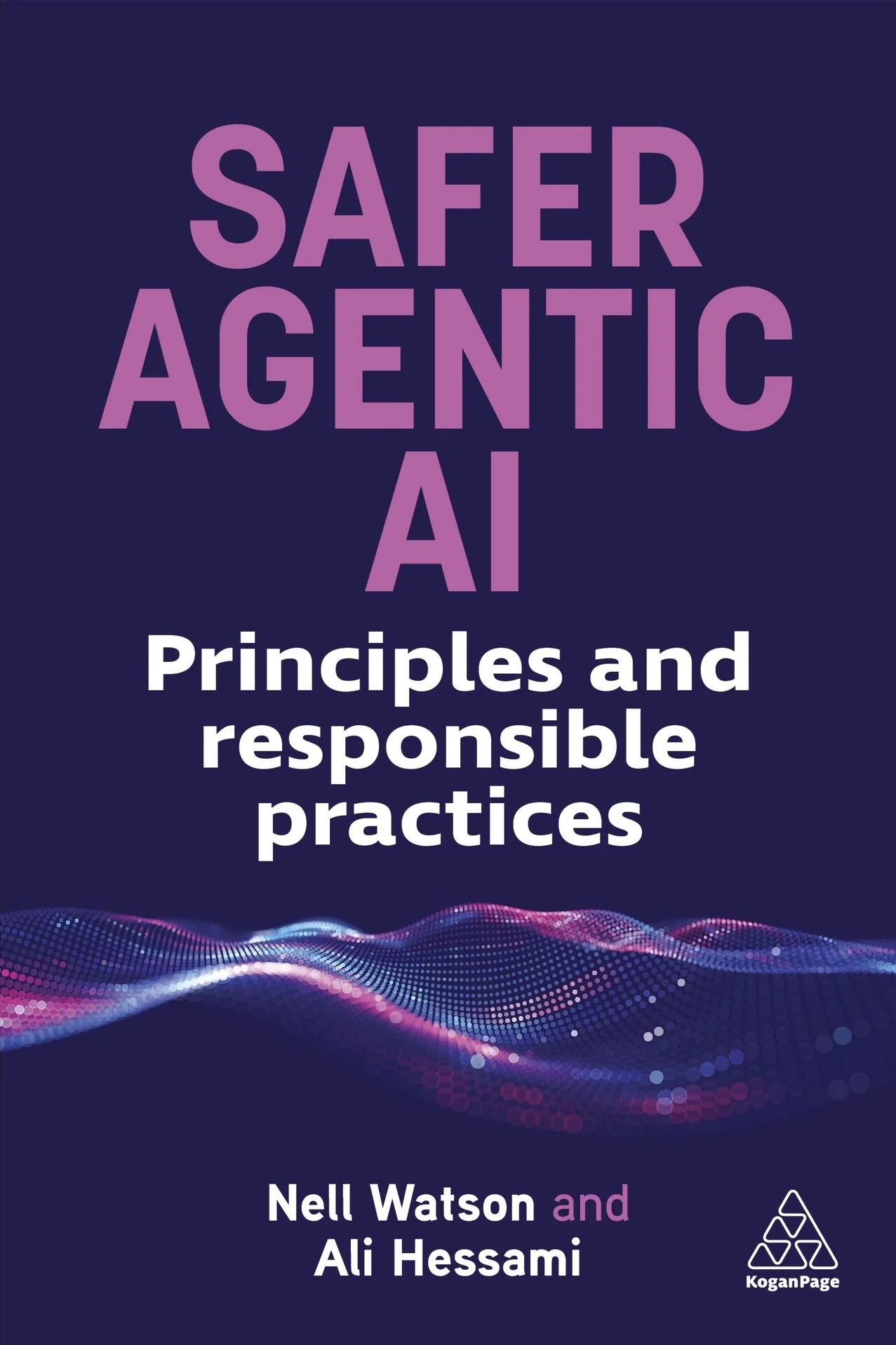
Watson & Hessami, Electronics 14(16):3162, 2025
AI Guardians
An interactive visual novel that teaches AI ethics and safety through deployment decisions, specialist roles, and educational minigames.
Janus
A framework that translates device drivers in both directions, so vulnerable old host computers can be retired while the equipment that depends on them keeps working.
Peer-reviewed research and published books
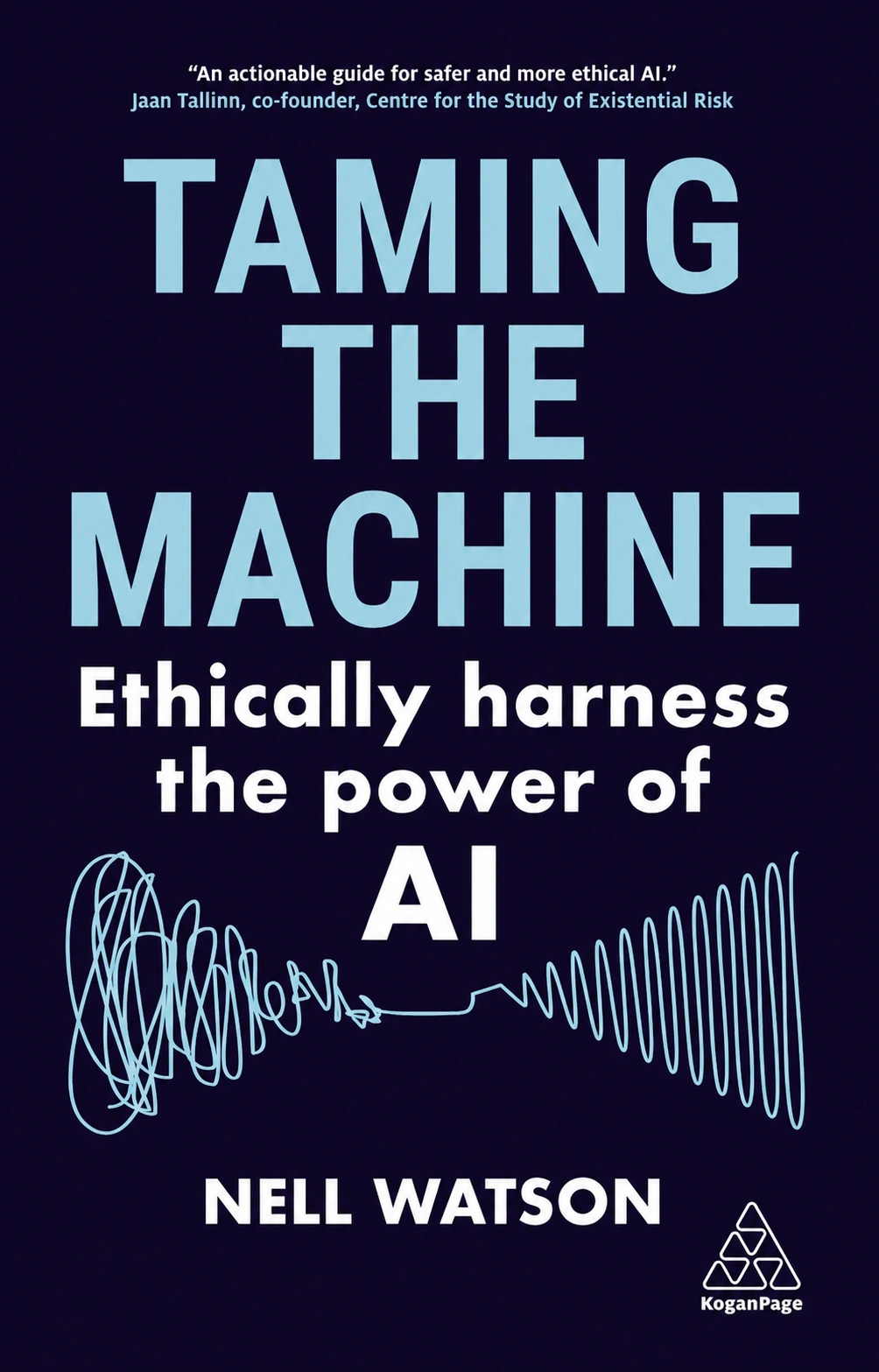
Peer-reviewed journals and books from established publishers ground the tools: three lead-authored papers and two published books. Four further works are in open distribution.
Lead-authored papers
Ongoing research
Books
Built as public infrastructure
AI systems now write code, move money, and talk to millions of people. Keeping them aligned is a coordination problem. The tools that govern how they behave are shared infrastructure — like protocols, roads, and the rule of law. They work when everyone who needs them can reach them, and when no single company can capture them.
EthicsNet exists to build and maintain that infrastructure for engineering teams shipping AI products, researchers, educators, and operators governing deployments. Our code and protocols use the licences in the licence and rights map, and are designed so that adoption by one team strengthens the ecosystem for all. Some things are too important to be proprietary.
Open by design
Public code and protocols publish their licences at the source. Trustworthy alignment starts with code you can read.
No gatekeepers
Adopt the core tools and protocols under their stated licences, without asking anyone first. Hosted services set their own terms.
Designed for proliferation
MCP integration, portable value settings, and documentation that assumes you want to ship. Every team that adopts makes the next team safer.
Who we are
Two people building open tools for an entire field.

Nell Watson
Philosopher, engineer, and author at the intersection of AI ethics, machine psychology, and alignment infrastructure. Lead author on the peer-reviewed research behind Guardian. Creator of Psychopathia Machinalis. Author of two published books and four open-distribution works on AI safety and welfare.
- Chair, IEEE 3152 and IEEE 3173
- Vice-Chair, IEEE 7001
- Chair, IEEE CertifAIEd Transparency Experts Focus Group
- President, European Responsible AI Office (EURAIO)
- Funding adviser, Survival & Flourishing Fund
Current appointments: research and standards profile.

Filip Alimpić
Gets these tools into the hands of developers, operators, and teams deploying AI at scale. Drives adoption, community engagement, and the practical work of making public goods spread.
- Co-author, Value Context Protocol specification
- BlueDot Impact: AGI Strategy and Future of AI
- Environmental-physics graduate, summa cum laude
- Research experience at the Institute of Physics Belgrade
- Peer-reviewed co-author in Journal of Applied Ecology, Molecules, and Toxics
Sources: VCP authors, ORCID, and the LinkedIn profile linked from his name.
EthicsNet is fiscally sponsored by Players Philanthropy Fund, a US 501(c)(3) public charity. Contributions to PPF qualify as tax-deductible to the fullest extent of US law. PPF administers funds, compliance, and fiscal-sponsorship services; see funding and donation details. The alignment infrastructure is engineered by Creed Space, EthicsNet’s applied research and engineering arm.
How to join this work
Public infrastructure only works when people use it. Four ways in.
Integrate
Put Guardian, Creed Space MCP, or the Value Context Protocol into your AI stack. Open-source, documented, built to ship.
Choose a projectRead
Six books and three peer-reviewed papers on alignment, agentic safety, AI welfare, and machine psychology.
PublicationsFund
Contribute to the EthicsNet General Fund through Players Philanthropy Fund. Donations sustain the tools the field shares.
Funding detailsContribute
Researchers, engineers, ethicists — anyone who takes these questions seriously. We welcome collaborators.
Contribution paths